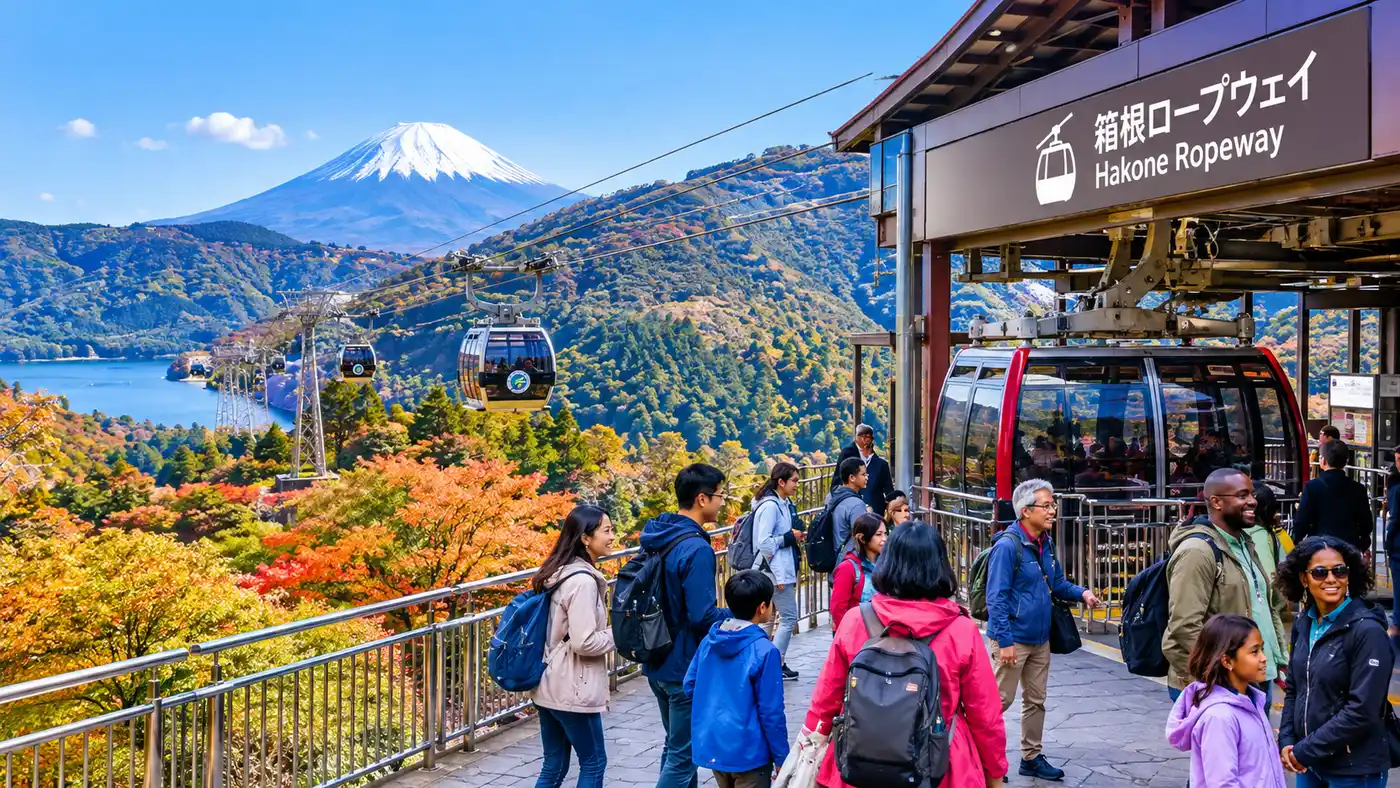
How to Get to Hakone Ropeway from Tokyo and Odawara
Figuring out how to get to hakone ropeway can feel a bit like solving a puzzle, mostly because the ropeway does not sit right outside a major train station. It is suspended high above the volcanic valleys of Kanagawa, tucked between Lake Ashi and the mountain ridges. You cannot just hop on a single train from downtown Tokyo and step directly into a gondola. You have to thread together a mainline train, maybe a switchback railway, a funicular, or a highway bus before you even hear the hum of the cable cables overhead.
Getting there is half the fun if you plan it right. Whether you are heading out from Shinjuku on a quick day trip, coming in from Tokyo Station on a bullet train, or standing on the platform at Odawara wondering which transfer gate to run toward, this guide breaks down every step. We will cover transit options, where to dump heavy bags, parking pitfalls, and how to avoid spending your morning trapped in transit bottlenecks.
Book your hakone ropeway experience:
Where Does Hakone Ropeway Start?
Before mapping out your transit, you need to understand where does hakone ropeway start. The ropeway is a 4-kilometer aerial lift spanning two distinct terminal points across the volcanic valley of Owakudani. You can board from either end, and your choice determines your entire route through the region.
The eastern terminal is Sounzan Station. This is where most visitors arrive when traveling in the classic counter-clockwise direction along the circuit. Sounzan sits at an altitude of 757 meters. It connects directly with the Hakone Tozan Cable Car, making it the natural extension for travelers coming up through Hakone-Yumoto and Gora. The station building was completely remodeled recently and features a gorgeous observation terrace with an outdoor footbath looking over the Gora valley.
The western terminal is Togendai Station, resting right on the shore of Lake Ashi. If you decide to do the loop backwards, or if you take an express highway bus directly from Tokyo, Togendai is where your journey airborne begins. It doubles as the ferry terminal for the pirate sightseeing boats that cruise the lake.
If you are typing a destination into Google Maps or your rental car navigation, the official hakone ropeway address for the Sounzan terminal is 1300-328 Gora, Hakone, Ashigarashimadistrict, Kanagawa 250-0408. For Togendai, use 164 Moto-Hakone, Hakone, Ashigarashimadistrict, Kanagawa 250-0522. Both stations have ticket windows, restrooms, and direct boarding ramps into the cabins.
Note: Bad weather or high volcanic gas concentrations can temporarily shut down sections between Sounzan and Togendai. Keep an eye on morning transit displays at major hubs before committing to your direction.
How to Get to Hakone Ropeway from Tokyo
Planning your trip from the capital comes down to speed versus simplicity. Most travelers tackle the journey from Shinjuku, but departing from Tokyo Station or Shinagawa is just as easy if you hold a Japan Rail Pass.
The classic path for tokyo to hakone ropeway travel starts at Shinjuku Station via the private Odakyu Electric Railway. The best ride on this line is the Odakyu Romancecar, a comfortable limited express train that gets you directly to Hakone-Yumoto Station in about 75 to 85 minutes. The seats recline, the windows are massive, and you can buy bento boxes right on the platform before departure. If you take a standard Odakyu rapid express commuter train instead, you save about 1,150 yen on the seat reservation fee, but the ride takes roughly 2 hours and requires a transfer at Odawara.
If your hotel is on the east side of Tokyo, near Ginza, Ueno, or Tokyo Station, the Tokaido Shinkansen is significantly faster. You can catch a Kodama or Hikari bullet train from Tokyo Station straight to Odawara Station. The ride takes just 34 minutes. From Odawara, you switch over to the local Hakone mountain transport network.
There is also a direct bus alternative that many people overlook. The Odakyu Hakone Highway Bus leaves Shinjuku Expressway Bus Terminal (Busta Shinjuku) and drops you directly at Togendai Station in roughly 2 hours and 15 minutes, traffic permitting. It eliminates every single train and cable car transfer along the way. I prefer the trains because Tokyo weekend traffic on the Tomei Expressway can add an hour to your bus trip without warning, but on an early Tuesday morning, that direct bus is remarkably stress-free.
Pro tip: If taking the Shinkansen to Odawara on a clear morning, reserve an ordinary seat on the right side (Seat E) for an early glimpse of Mount Fuji as you speed past Hiratsuka.
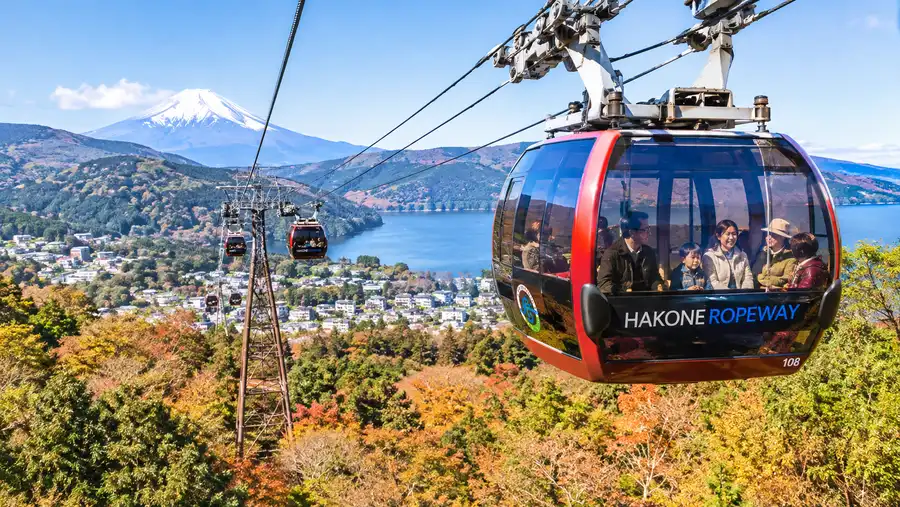
Odawara Station to Hakone Ropeway via Hakone-Yumoto
Once you step off the mainline trains at Odawara, the real mountain transit begins. Odawara station to hakone ropeway transit paths divide into two primary choices: riding the scenic mountain railway network or hopping on a direct bus.
The scenic route is part of the famous Hakone Free Pass Golden Loop itinerary. From Odawara, you board the Hakone Tozan Railway to Hakone-Yumoto Station, which takes around 15 minutes. At Hakone-Yumoto, you cross the platform to board the small mountain railway train bound for Gora. This leg is steep and slow. The train crawls up the mountain through dense cedar forests, reversing direction three times across switchbacks to gain elevation. It takes about 40 minutes to reach Gora.
At Gora Station, the route changes again. You exit the train and walk straight onto the Hakone Tozan Cable Car. This funicular pulls you up a steep incline through small hillside neighborhoods, stopping at six tiny stations before arriving at Sounzan. The funicular takes about 10 minutes. At Sounzan, you ride an escalator up to the second floor, tap your ticket, and step right into the Hakone Ropeway cabins. Total travel time from hakone yumoto station to ropeway at Sounzan via these mountain connections averages around 55 to 65 minutes, depending on platform crowds.
If you prefer a faster route without multiple transfers, you can catch the Hakone Tozan Bus (Line J or Line Z) directly from Odawara Station bus terminal or Hakone-Yumoto Station. These buses wind their way up the mountain pass toward Moto-Hakone or Kojiri, near Lake Ashi. From there, you can connect to Togendai to catch the ropeway going east. Riding the bus cuts out the switchback train, but mountain roads are twisty; if you get carsick easily, stick to the railway and cable car.
- The classic train and funicular chain: Odawara to Hakone-Yumoto (rail), transfer to Gora (mountain switchback train), transfer to Sounzan (funicular cable car), then board the ropeway directly.
- Direct mountain bus: Board the Hakone Tozan Bus Line T from Odawara or Hakone-Yumoto directly to Togendai Station in roughly 45 to 55 minutes.
- Lake cruise connection: Take a bus from Odawara directly to Moto-Hakone port, ride the pirate ship across Lake Ashi, and dock at Togendai to start the ropeway climb up to Owakudani.
Book your hakone ropeway experience:
Transit Comparison: Routes to the Ropeway
To help you figure out the cleanest route for your timing and budget, here is how the primary transport methods from Tokyo and Odawara stack up against each other.
| Starting Point | Route Summary | Approx. Travel Time | Approx. Cost (One Way) | Number of Transfers |
|---|---|---|---|---|
| Shinjuku Station | Romancecar to Hakone-Yumoto > Train > Cable Car to Sounzan | 2 hrs 15 mins | 3,000 yen | 3 |
| Shinjuku Station | Highway Bus directly to Togendai Station | 2 hrs 15 mins | 2,200 yen | 0 |
| Tokyo Station | Shinkansen to Odawara > Bus Line T to Togendai | 1 hr 35 mins | 4,800 yen | 1 |
| Tokyo Station | Shinkansen to Odawara > Train > Cable Car to Sounzan | 1 hr 50 mins | 4,400 yen | 3 |
| Odawara Station | Tozan Train to Gora > Cable Car to Sounzan | 1 hr 10 mins | 1,050 yen | 2 |
| Odawara Station | Bus Line T straight to Togendai Station | 50 mins | 1,250 yen | 0 |
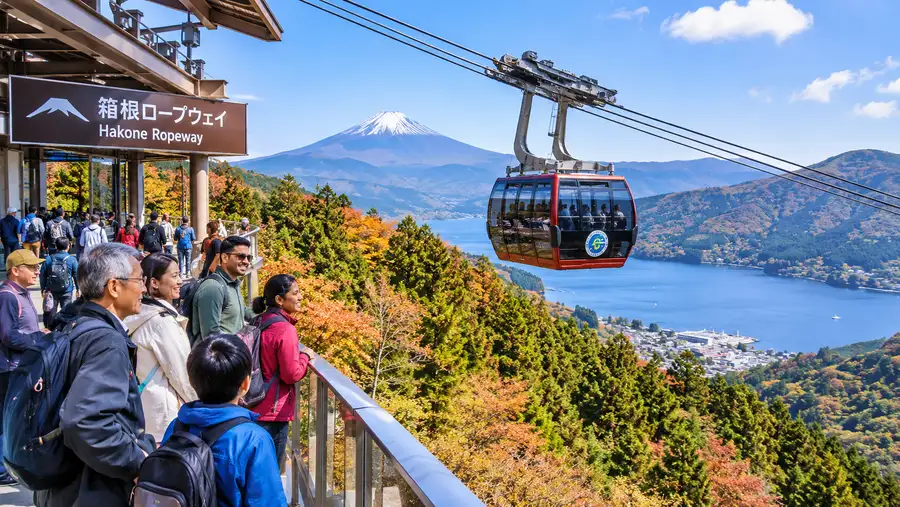
Luggage, Driving, and Parking Logistics
Dragging rolling suitcases onto the mountain transit network is miserable. Cabins on the ropeway hold roughly 18 people, and during peak hours, staff will pack passengers in tightly. Large suitcases take up valuable standing room and block the automatic sliding doors.
Handling hakone ropeway luggage is straightforward if you use the local delivery infrastructure. The Hakone Tozan Baggage Service operates a service counter inside Hakone-Yumoto Station, located near the main ticket gates. Drop your bags off before 12:30 PM, and staff will forward them directly to your ryokan or hotel anywhere in the Hakone area by late afternoon. The cost runs between 1,000 and 1,800 yen per bag depending on size. Alternatively, you can stash bags in coin lockers at Odawara Station or Hakone-Yumoto Station if you are returning to Tokyo on the same evening.
If you decide to drive yourself, navigating the mountain switchbacks takes patience. The roads are narrow, full of tight hairpins, and shared with massive transit buses. Locating hakone ropeway parking is thankfully relatively easy once you reach the terminals, though availability fluctuates wildly based on the season.
- Sounzan Station Parking: Free public parking is located right beside the station building. It holds around 110 cars, but fills up completely by 10:00 AM on weekends and holiday weeks.
- Togendai Station Parking: Several large surface lots surround the lake terminal. There is a paid parking lot holding about 400 vehicles, alongside smaller private pay lots nearby. Expect to pay around 1,000 yen for daily parking.
- Owakudani Intermediate Parking: There is a large parking lot directly at the Owakudani volcanic crater station. It charges roughly 1,050 yen for regular passenger vehicles. Driving here directly during mid-day often results in a brutal 60-minute traffic queue on Route 734. We strongly recommend parking at Sounzan or Togendai and riding the ropeway up to Owakudani instead.
For travelers who dread coordinating three train transfers and checking bus schedules, booking a guided hakone ropeway tour from central Tokyo is a stress-free fallback. Most full-day coach tours pick up near Shinjuku or Tokyo Station, drive to Lake Ashi, include a short cruise and a one-way ride on the ropeway up to Owakudani, and stop at Gotemba Premium Outlets on the return. It leaves less room for spontaneous rambling, but you get guaranteed seats and zero transfer anxiety.
Frequently Asked Questions about how to get to hakone ropeway
What is the fastest way to get to the Hakone Ropeway from Tokyo?
The fastest route is boarding the Tokaido Shinkansen from Tokyo Station to Odawara Station (34 minutes), then taking the Hakone Tozan Bus Line T directly to Togendai Station (about 50 minutes). Total journey time is under two hours.
Can I use the Japan Rail Pass to reach the ropeway?
The JR Pass covers your Shinkansen trip from Tokyo to Odawara Station. However, it does not cover any transit within Hakone, such as the Tozan trains, buses, funicular, or the ropeway itself. Those are run by private companies like Odakyu.
Is Hakone Ropeway covered by the Hakone Free Pass?
Yes, the Hakone Free Pass covers unlimited rides on the entire ropeway between Sounzan and Togendai, along with the Tozan train, funicular cable car, Lake Ashi sightseeing pirate boats, and local Tozan buses.
Where should I leave my luggage while riding the ropeway?
Leave your suitcases in lockers at Hakone-Yumoto Station, or use the baggage forwarding service inside the station to deliver your bags directly to your mountain hotel for a small fee.
Quick Reference
- Main access gateways: Shinjuku Station (Odakyu) or Tokyo Station (Shinkansen via Odawara)
- Eastern Ropeway Terminal: Sounzan Station (accessed via Gora funicular)
- Western Ropeway Terminal: Togendai Station (accessed via Lake Ashi cruise or bus)
- Average transit time from Tokyo: 2 to 2.5 hours
- Baggage forwarding: counter at Hakone-Yumoto Station handles luggage to local hotels
Book your hakone ropeway experience:
Before You Go
Getting your connections sorted ahead of time turns a potentially chaotic travel day into a seamless glide above volcanic steam vents. Pick up a digital transit card or purchase a local transport pass before you depart, aim to reach the mountain before the mid-morning tour buses pull into the station lots, and give yourself enough room in the schedule to linger over the views at Sounzan or Owakudani without watching the clock.
Read more about hakone ropeway.