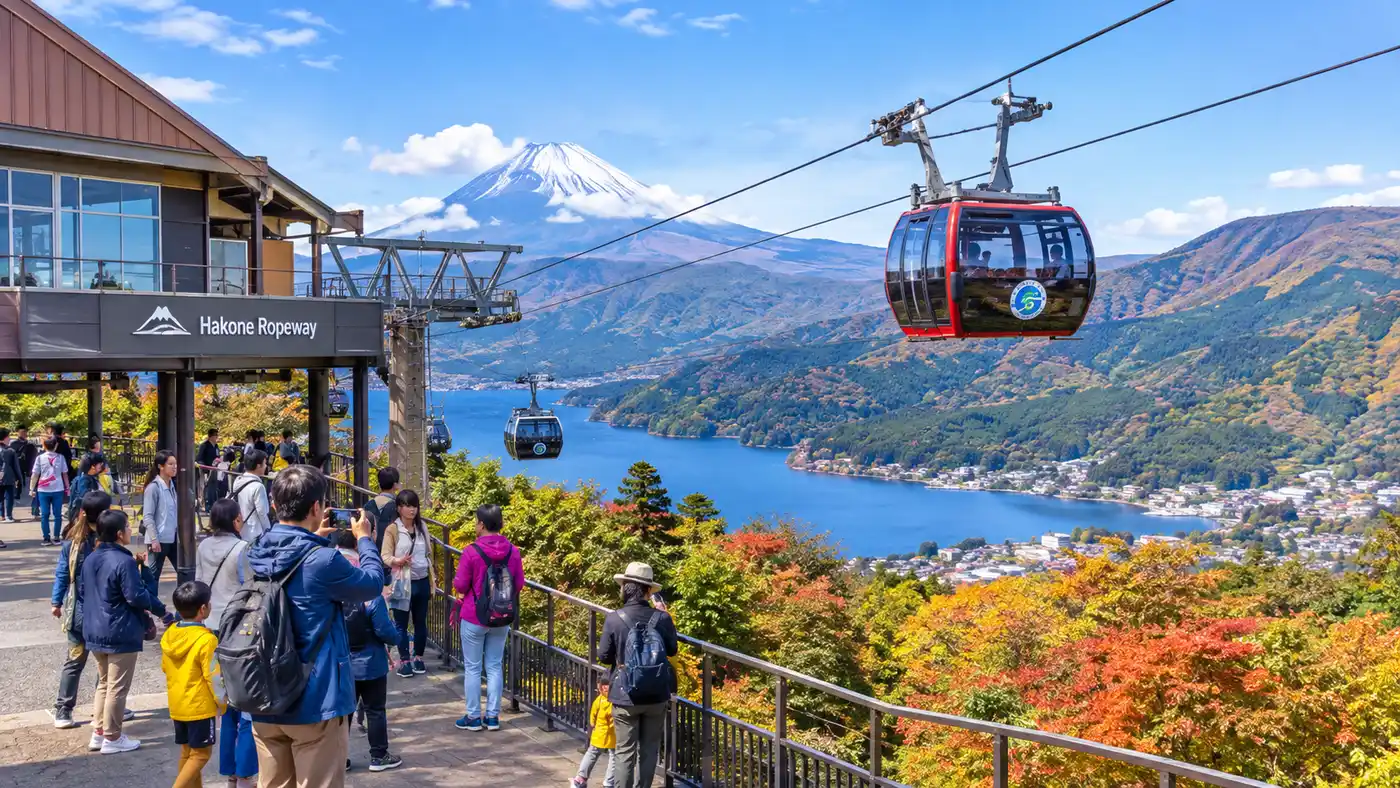
Hakone Ropeway Live Status, Closures and Weather Guide
I learned the hard way that mountains do not care about your travel itinerary. A few years ago, I stood on the windy platform at Sounzan with my morning coffee freezing in my hand, staring at completely motionless cables. The wind was whipping over the ridge at roughly 45 kilometers per hour, and every single gondola was parked inside the station. If I had bothered checking the hakone ropeway status live before leaving my hotel in Gora, I could have slept an extra hour and avoided a very cold, frustrating morning.
The Hakone Ropeway is the scenic spine of the famous Hakone circuit, lifting thousands of visitors every day up over the sulfurous vents of Owakudani down toward the waters of Lake Ashi. It is also an aerial lift perched across high, exposed mountain terrain. Closures happen often. Gusty winds, deep fog, sulfur gas spikes, winter rime ice, and scheduled track overhauls will halt service without much advance notice. Here is what actually shuts the ropeway down, how to read the weather signs before you head out, and what to do if you find the line halted.
Book your hakone ropeway experience:
Why the Hakone Ropeway Gets Suspended
Wind is the most common reason for an unexpected shutdown. The lift spans a broad valley and crosses an exposed mountain pass at an altitude of over 1,000 meters. The gondolas use a sturdy double-cable system known as the Funitel, which handles side breezes much better than standard ski lifts. Still, safety protocols kick in when sustained gusts pass around 20 to 25 meters per second. When those gusts hit, the operators will pause the line immediately, park the cabins at the terminals, and wait for conditions to ease.
Volcanic gas is the second culprit. Owakudani is an active volcanic valley emitting high concentrations of hydrogen sulfide and sulfur dioxide. On still days with little atmospheric movement, toxic gas can pool in the hollows near the station. Sensors monitor gas levels every single second. If chemical readings spike beyond safe thresholds, the operators trigger a prompt hakone ropeway suspension between Sounzan and Owakudani to protect people with asthma or heart conditions. Sometimes the western stretch between Owakudani and Togendai keeps running normally while the eastern side is sealed off.
Note: Volcanic gas shutdowns can happen on bright, cloudless days. Even if the sky looks blue, high sulfur levels near Owakudani Station black eggs and volcanic views will shut down the cabins without warning.
Mechanical safety checks round out the list. If lightning strikes nearby, or if power grids fluctuate during summer thunderstorms, the automated safety systems freeze the line. Honest traveler truth: the operators here are exceptionally cautious. They will never gamble with passenger safety to keep tour buses on schedule.
Hakone Ropeway Weather: Rain, Wind, and Winter Conditions
Rain alone rarely stops the gondolas. I have ridden through torrential downpours where water ran in sheets down the cabin glass. It feels a bit like riding inside a car wash, and you will not see Mount Fuji or the valley below, but the cars glide along smoothly. If you wake up to gray skies, hakone ropeway rain is generally no reason to cancel your trip unless it comes paired with gale-force winds.
Hakone ropeway weather gets tricky in deep autumn and winter. From late December through February, temperatures at Owakudani drop well below freezing, often hovering around -4 to -8 degrees Celsius. Freezing fog creates rime ice on the cables and support towers overnight. Before passengers can board in the morning, workers must run empty cars or de-icing rigs along the span to clear the heavy build-up. This often causes delayed openings of 30 to 90 minutes on freezing mornings.
Heavy snow can also cause a hakone ropeway winter shutdown, although deep blizzards are somewhat rare in Kanagawa. When snow does fall, it sticks fast to the mountain roads and tree canopies. It makes the ride look like a traditional ink painting, but the cold wind coming off Mount Kami often prompts partial delays until midday sun softens the cables.
Visibility is an entirely separate issue from operations. The ropeway can be operating at full capacity while buried inside a thick cloud bank. If your primary goal is seeing Mount Fuji across the valley, high humidity and fog will ruin that view even if the cabins are spinning. You can check webcam feeds in the morning to see if the peak is actually visible.
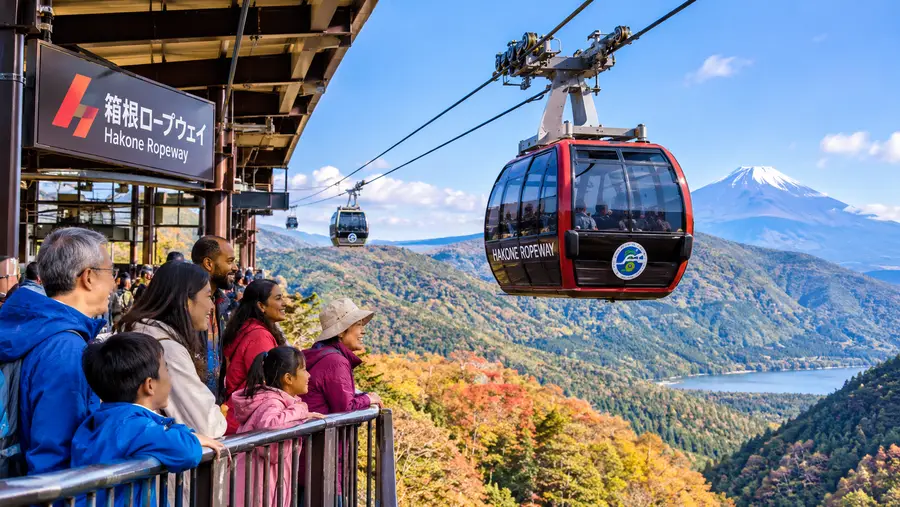
Scheduled Hakone Ropeway Maintenance and Inspections
Beyond wild weather, mechanical overhauls take the system offline every year. The operators divide the ropeway into two separate segments: Sounzan to Owakudani, and Owakudani to Togendai. Regular hakone ropeway maintenance takes place annually, usually split across separate weeks in January, February, or occasionally June.
During these routine inspection periods, one half of the system will close entirely for 7 to 14 days while technicians inspect cables, overhaul drive motors, and certify mechanical brakes. If you ask yourself "is hakone ropeway still closed?" during the winter months, there is a decent chance an annual inspection is underway. The good news is that they almost never close both sections simultaneously for routine work.
When maintenance takes place, substitute transit activates immediately. The Hakone Tozan Bus company runs dedicated replacement coaches between the closed stations. If the Sounzan stretch is under maintenance, buses shuttle passengers directly between Sounzan and Owakudani along the mountain highway. Your transit passes remain fully valid on these buses, so you will not spend extra money, though boarding and winding along switchbacks adds 15 to 25 minutes to the trip.
Major mechanical overhauls get announced weeks in advance on the official Odakyu transit portals. Checking the maintenance schedule before booking non-refundable mountain ryokan stays saves a world of disappointment.
Book your hakone ropeway experience:
How to Check If Hakone Ropeway Is Open Today
Finding out whether the hakone ropeway open status has changed does not require guessing. You have several real-time sources you can tap right from your phone before you board your morning train from Shinjuku or Odawara.
First, check the live operations status banner on the official Hakone Tozan transport website. They update the color-coded alerts continuously between 8:30 AM and 5:00 PM. A green icon indicates clear operations, yellow signals partial delays or single-section suspensions, and red confirms a full shutdown across the entire ridge. Station digital signage throughout the Odakyu network also flashes notifications.
Pro tip: Look at the electronic display board right next to the ticket gates at Hakone-Yumoto Station before boarding the mountain train; it tells you if the ropeway is running hours before you reach the summit.
Keep the operating hours in mind when planning your day. People frequently ask when does hakone ropeway close in the evening. Service typically wraps up earlier than city transit:
- Standard summer hours (March to November): cabins run from 9:00 AM until 4:45 PM.
- Standard winter hours (December to February): the system closes early, running from 9:00 AM until 4:15 PM.
- Final boarding times: boarding queues close roughly 15 minutes prior to the station shutters coming down.
- Severe weather cutoffs: operations can halt abruptly mid-afternoon if winds pick up, leaving stranded travelers to take buses back down.
If you arrive at Togendai or Sounzan past the closing bell, you will find locked glass doors and dark platforms. Always track the Hakone Ropeway timetable and route stations to make sure you do not miss that last connection over the mountain.
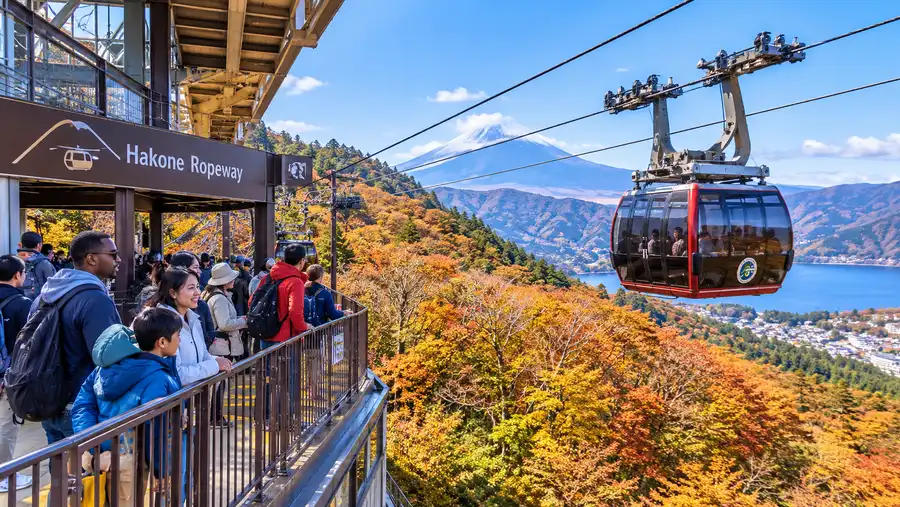
What to Do When Hakone Ropeway Is Closed: Alternate Routes
When the dreaded hakone ropeway closed sign appears, do not panic. Hakone has one of the most redundant public transit networks in Japan. The entire Golden Loop itinerary was designed with backup options to handle volatile mountain weather.
If the line stops while you are at Sounzan trying to reach Lake Ashi, walk outside to the bus turnaround. Hakone Tozan operates regular transit buses that run straight from Sounzan or Gora down to Kojiri and Togendai at the lake's edge. Alternatively, you can hop on the Izu Hakone bus lines. If you hold a free transit pass, make sure you board the Hakone Tozan branded buses, as private competitor lines may require separate cash fares.
| Weather Condition | Ropeway Status | Impact on Views | Alternative Transit |
|---|---|---|---|
| Light to Moderate Rain | Normal Operation | Very poor; clouds hide Fuji and valley | None needed; cabins run normally |
| High Wind (>20 m/s) | Suspended | Clear or stormy; wind is unpredictable | Replacement bus from Sounzan to Togendai |
| Dense Fog / Low Cloud | Normal Operation | Zero visibility; whiteout conditions | Buses run, but scenery is hidden everywhere |
| Volcanic Gas Alert | Partial Closure | Often sunny; Owakudani station sealed | Direct bypass shuttle skipping Owakudani |
| Freezing Cables / Ice | Morning Delays | Crisp, brilliant views once fog lifts | Wait 45 mins or take Tozan bus via Kowakudani |
If your entire goal for the day was tasting black eggs and hiking the sulfur zone, a closure means you must pivot. Here are practical ways to salvage your afternoon when cables freeze or winds blow:
- Head directly to Lake Ashi: take the direct highway bus from Hakone-Yumoto or Kowakudani to Moto-Hakone, visit the shrine water torii, and ride the sightseeing cruise without crossing the mountain.
- Explore lower valley hot springs: spend three relaxing hours at an onsen facility in Miyanoshita or Yumoto while waiting out mountain gusts.
- Visit the Open-Air Museum: located down in Chokoku-no-Mori near Gora, this sculpture park stays open during heavy winds that shut the high-altitude ropeway down.
- Reverse your loop itinerary: if the morning forecast shows high winds tapering off by 1:00 PM, take the bus down to the lake first and try riding the ropeway back up in late afternoon.
Flexibility is everything in the mountains. I have had days where the ropeway suspension forced me onto a local bus, which led me to an uncrowded soba noodle shop in a quiet corner of Sengokuhara that I never would have discovered otherwise.
Frequently Asked Questions about hakone ropeway status live
How often does the Hakone Ropeway close due to weather?
The ropeway experiences short weather delays or partial closures roughly 20 to 35 days per year, with high winds between November and March being the most frequent culprit.
Does the Hakone Ropeway run when it rains?
Yes, standard rain does not stop the ropeway. Gondolas operate normally in rainy conditions unless the storm brings sustained high winds or lightning strikes near the ridge.
Can I get a refund if the ropeway is suspended?
If you purchased an individual ropeway ticket at the counter, unused portions are refundable at station windows. If you are using a multi-day regional travel pass, no partial refunds are issued, but substitute buses are provided at no extra charge.
How do I know if the ropeway will be open today before leaving Tokyo?
Check the live transit status on the Hakone Tozan or Odakyu official websites around 8:30 AM. Station masters update the digital status board as soon as morning safety runs finish testing the cables.
Quick Reference
- Normal daily hours: 9:00 AM to 4:45 PM (closes 4:15 PM in winter)
- Main closure trigger: winds exceeding 20-25 meters per second
- Alternative transit: free replacement buses run during major halts
- Highest point: Owakudani Station at 1,044 meters elevation
Book your hakone ropeway experience:
Before You Head Up
Do not let the fear of bad weather put you off making the climb. When the weather cooperates, soaring above the sulfur ravines of Owakudani with Mount Fuji standing massive on the horizon is one of the most memorable travel experiences anywhere in Japan. Just pull up the morning status board over breakfast, check the wind speeds, keep your travel pass handy for the replacement buses if the cables go quiet, and enjoy the adventure however the mountain decides to serve it up.
Read more about hakone ropeway.