Hakone Ropeway Route, Stations, Timetable and Duration
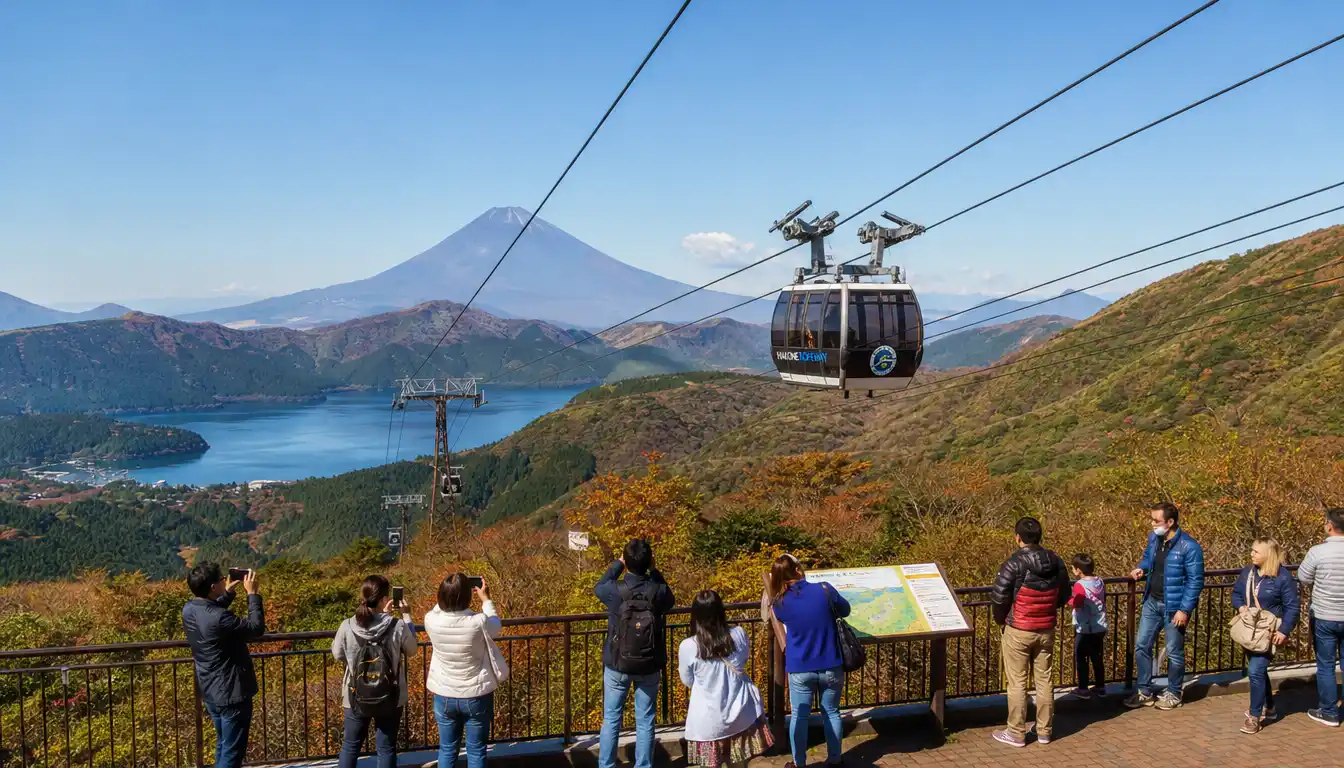
Most travelers visualize Mt. Fuji floating serenely above the clouds when planning a trip west of Tokyo, but standing on the breezy platform at Sounzan as morning mist sweeps across the ridge changes the mood entirely. Navigating the full hakone ropeway route is simple enough once you understand how the mountain connects together, though looking at transit maps from a desk in Shinjuku can make it seem far more complicated than it actually is. The ropeway links Sounzan to the shore of Lake Ashi at Togendai, climbing over volcanic vents and dangling you high above a jagged green wilderness.
I learned the hard way that you cannot just show up at 3:30 in the afternoon and expect to complete the loop without running. Understanding the route map, where each transfer happens, how long the gondola cabins take between stops, and how the timetable shifts between summer and winter makes the difference between an effortless mountain day and a stressed scramble for the last bus back down to Odawara.
Book your hakone ropeway experience:
Breaking Down the Hakone Ropeway Route and Map
The aerial lift runs roughly west from Sounzan Station up to Owakudani, before descending southwest toward Lake Ashi. It spans roughly 4 kilometers in total aerial distance. The system is split into two distinct operational halves, meaning you must exit your cabin at Owakudani and walk across the station concourse to board a second cabin to continue toward your destination. Many first-timers do not realize this transfer exists, assuming one gondola takes them uninterrupted across the ridge.
At Sounzan, the lift connects directly with the Hakone Tozan Cable Car coming up from Gora. If you took the mountain railway up from Hakone-Yumoto, transferred to the funicular at Gora, and rode it to the top terminus, you walk straight out of the cable car gates and onto the ropeway concourse. The transition is seamless, marked by crisp English signage and station staff directing foot traffic. From Sounzan, the gondolas launch over the mountain shoulder toward Owakudani, which sits at an elevation of 1,044 meters.
The second leg drops from Owakudani down through Ubako Station before terminating at Togendai on the lake. Ubako is a sleepy mid-mountain halt where few people disembark unless they are staying at nearby hot spring ryokan. Most riders stay seated as the cabin doors swing open and shut in three seconds, drifting down through the quiet cedar canopy all the way to Lake Ashi.
| Station | Elevation | Ride to Next Station | Key Connections & Highlights |
|---|---|---|---|
| Sounzan | 757 m | 8 minutes | Hakone Tozan Cable Car, outdoor footbath terrace |
| Owakudani | 1,044 m | 8 minutes | Volcanic sulfur vents, black eggs, gondola transfer |
| Ubako | 878 m | 8 minutes | Walking trails, quiet hot spring hotels, Mount Fuji viewpoints |
| Togendai | 741 m | Terminus | Hakone Sightseeing Cruise (pirate ships), highway buses |
Hakone Ropeway Stations: What to Expect at Each Stop
Sounzan Station is your launchpad if you travel counter-clockwise around the loop. It was renovated a few years ago and features a second-floor viewing terrace called cu-mo Hakone. There is a wooden footbath filled with natural hot spring water where you can soak your feet while watching the morning vapor rise out of the valley. Grab a hot roasted green tea from the wooden counter inside if the mountain air has a bite to it.
Leaving Sounzan, the gondola rises over the treeline and suddenly crests the ridge. The ground drops away beneath you into the sulfurous, barren expanse of the Owakudani valley. Steam pours out of yellow-stained rock fissures, and the pungent reek of sulfur fills the cabin through the roof vents. It smells like boiling eggs, which is fitting because Owakudani Station and its black eggs remain the primary reason thousands of people make this trek every single week. The station itself is sprawling, crowded, and houses souvenir shops selling volcanic face masks and boxes of black sesame candies.
Pro tip: When boarding at Owakudani toward Togendai, try to snag a seat on the right side of the gondola facing forward. On clear mornings, Mount Fuji appears suddenly between the tree branches just past Ubako.
Ubako Station feels completely detached from the madness of Owakudani. It sits nestled in thick mountain forest. The ropeway slows to walking pace as it glides through the covered dock, but almost nobody gets off. If you have an hour to kill, getting off here gives you access to a quiet forest path that winds down toward the lake, free from the crowds clutching tour flags. The final stop is Togendai Station, sunken right against the shore where you board the Lake Ashi sightseeing cruise to cross toward Moto-Hakone.
Hakone Ropeway Timetable, Hours, and Operating Schedule
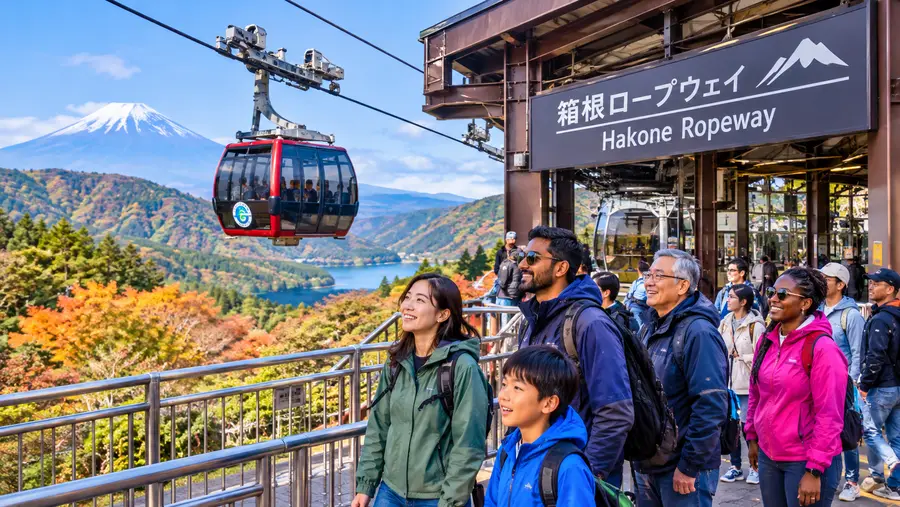
You will not find a rigid minute-by-minute departure timetable pinned to the wall, because the system does not need one. The gondolas run continuously on a circulating cable. A 18-passenger cabin arrives at the boarding gate roughly every 60 seconds, which keeps lines moving steadily even during midday peaks. You simply join the queue, step onto the slow-moving cabin floor when the attendant nods, and off you go.
The operating hours shift depending on the calendar. Summer brings longer daylight and slightly extended operations, while winter shuts down early because darkness falls fast over the Kanagawa mountains. Missing the last ropeway cabin is a headache that leaves you relying on local buses with winding routes and confusing evening schedules.
- February to November hours: Gondolas run from 9:00 AM to 4:45 PM daily.
- December to January hours: The ropeway opens at 9:00 AM and closes earlier at 4:15 PM.
- Departure intervals: Cabins depart continuously roughly every minute without fixed departure slots.
- Cabin capacity: Each gondola holds up to 18 people, though attendants often load 10 to 12 during lighter hours.
Note: High winds above 20 meters per second or elevated volcanic gas emissions at Owakudani trigger automatic safety shutdowns. Replacement buses run along the highway when this happens, but transit times triple.
Book your hakone ropeway experience:
How Long Does the Hakone Ropeway Take? Real Duration and Round Trip Times
If you stay inside the gondola and only pause long enough to walk across the station floor at Owakudani, the one-way transit from Sounzan to Togendai takes exactly 24 minutes. Each individual section takes roughly 8 minutes of air travel. It feels fast. One minute you are looking at cedar forests, the next you are suspended 130 meters above smoking ravines, and then you are descending toward the sparkling blue water of Lake Ashi.
Pure transit time rarely reflects reality. Most travelers spend 45 to 90 minutes exploring Owakudani, eating a black egg boiled in the mineral springs, and walking out to the scenic overlook platform to snap photos of Mount Fuji. If you run into midday queues in autumn, waiting for a cabin can add another 20 minutes to your transit at each station.
A full round trip without stepping off to explore eats up about an hour, including the brief station transfer. If you plan to make a complete excursion out of it, riding from Sounzan to Togendai, taking a 30-minute cruise across the lake, having a quick lunch of soba, and coming back up the mountain, budget at least 3.5 to 4 hours. Time slips away quickly when lines form at the ticket barriers.
Practical Tips for Riding the Hakone Ropeway Gondola
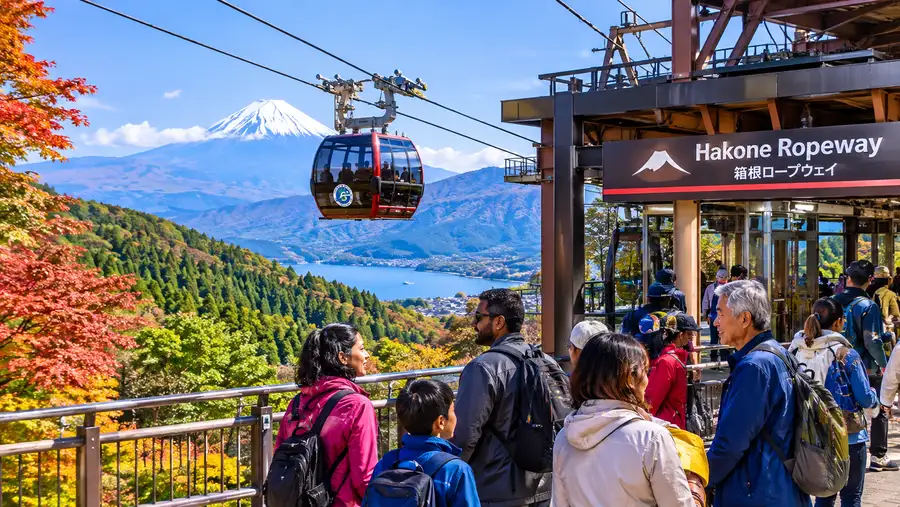
Boarding during the Golden Loop rush hour between 11:00 AM and 1:30 PM tests anyone's patience. Tour groups arriving by coach pack the concourses, especially at Owakudani. If you arrive at Sounzan right around 9:00 AM, you get near-empty cabins and the crispest morning light for photography across the crater. The afternoon brings hazy skies, which can obscure Fuji even on days that started completely clear.
- Luggage restrictions: Large rolling suitcases are clumsy on the ropeway and block cabin space. Forward bulky bags from Tokyo to your ryokan using luggage delivery services.
- Gas sensitivity: People with asthma, bronchitis, or heart conditions should avoid spending extended time at Owakudani due to high concentrations of sulfur dioxide.
- Ticketing efficiency: Purchase a regional pass beforehand to skip individual ticket windows; you can simply tap or flash your pass at the turnstile attendant.
- Weather monitoring: Check the Hakone Ropeway official website on your phone before leaving Hakone-Yumoto to ensure the line is not suspended for wind.
Getting your bearings early saves money too. Buying single-segment tickets adds up fast compared to a loop pass, so calculate your route carefully before standing in line. The gondola windows are large, tinted lightly, and have small slide-down ventilation slats at the top that let in the mountain breeze.
Frequently Asked Questions about hakone ropeway route
Can you ride the Hakone Ropeway round trip without getting off?
You cannot stay in the exact same cabin for the entire journey. You must disembark at Owakudani and walk through the station to switch cables, and at Togendai you must exit the gate and re-enter the queue if you hold a round-trip ticket.
How long is the Hakone Ropeway in total distance?
The total route covers approximately 4 kilometers of cable wire, stretching from Sounzan Station up across the volcanic crater and down to the shore of Lake Ashi at Togendai.
Is the ropeway covered by the regional tourist passes?
Yes, standard multi-day Hakone travel passes cover unlimited rides on the entire ropeway line between Sounzan, Owakudani, Ubako, and Togendai without paying extra fares.
What happens if the ropeway shuts down due to bad weather?
When high winds, maintenance, or high volcanic gas levels stop the cabins, transportation operators run substitute shuttle buses along the mountain road connecting Sounzan, Owakudani, and Togendai.
Quick Reference
- Total one-way ride: 24 minutes
- Mandatory cabin transfer: Owakudani Station
- Peak elevation: 1,044 meters
- Hours: 9:00 AM to 4:45 PM (closes 4:15 PM in winter)
- Departures: Continuous every 60 seconds
Book your hakone ropeway experience:
Before You Head Up
The ropeway remains the highlight of any trip across the Hakone mountains, but it pays to be flexible with your timing. Wind conditions shift quickly around the caldera, and clear morning skies can turn into thick cloud cover by early afternoon. Check the line status first thing over breakfast, arrive early at Sounzan before the tour buses roll in, and keep your camera ready the second your gondola glides over the crater lip.
Read more about hakone ropeway.