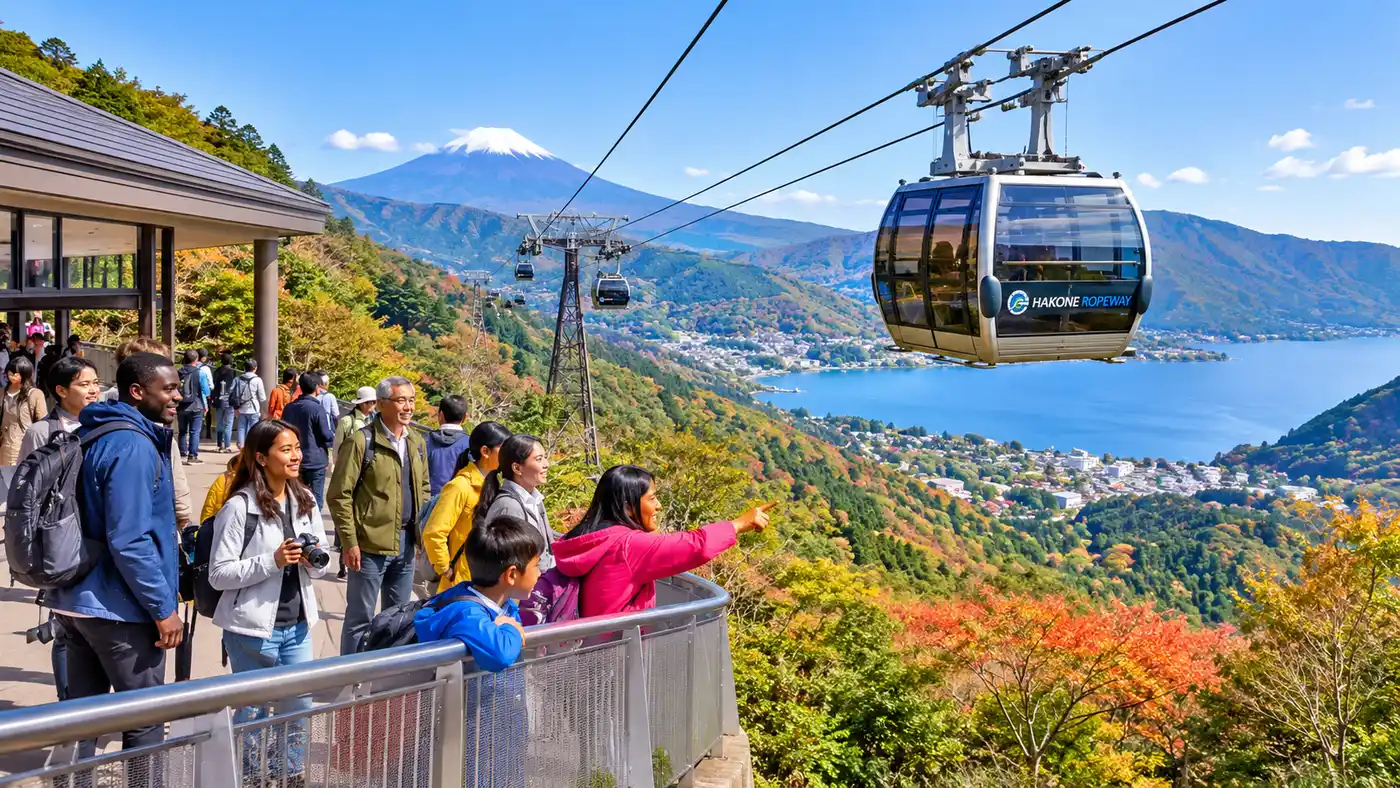
Hakone Komagatake Ropeway: Guide, Prices and Comparison
Most travelers heading toward Lake Ashi assume there is only one cable car in the area. They buy their transit passes, follow the crowds up the volcanic gorge toward sulfur vents, and never realize another ridgeline sits just across the water. The hakone komagatake ropeway climbs an entirely different peak, rising steeply from the lakeside complex at Hakone-en directly to the windy crest of Mount Komagatake. It gives you one of the most unobstructed vistas of Mount Fuji anywhere in the valley, yet surprisingly few international tourists ever ride it.
Part of this comes down to transit marketing, and part of it is simple geography. This guide covers everything you need to plan a trip up the mountain, from ticket costs and operating schedules to a direct side-by-side comparison with the more famous Owakudani cable car route.
Book your hakone ropeway experience:
What Is the Hakone Komagatake Ropeway?
Operating since 1963, this aerial tramway connects the eastern shore of Lake Ashi to the northern shoulder of Mount Komagatake. The summit reaches 1,356 meters, though the top station sits slightly lower at 1,327 meters. Unlike the continuous gondolas on the other side of the lake, this system uses two large cable cars that counterbalance each other. One cabin travels up while the other descends along a 1,783-meter track of steel cable.
Each car holds up to 101 passengers. The journey takes roughly 7 minutes from the lakeshore platform to the upper terminal. Because it moves on an aerial track with only a couple of support towers along the slope, the cabin swings gently over the treetops before dangling out over a sharp rocky drop near the top. Looking out the back windows gives you an expanding view across the entire southern basin of Lake Ashi, while the forward view stares straight into the volcanic grass slopes of the upper peak.
Locals and domestic travelers frequently call this the hakone en ropeway because the base station is integrated directly into the Hakone-en recreation park. The complex at the bottom includes a small public aquarium, an animal petting area, souvenir halls, and the Prince Hotel grounds. It has a slightly faded Showa-era charm to it. You will see school groups and Japanese families picnicking near the water, which creates a much slower, quieter vibe than the high-turnover bus stops at Moto-Hakone down the road.
At the top, the environment shifts drastically. The trees vanish, replaced by dwarf bamboo, volcanic rocks, and low alpine shrubs that bend permanently away from the wind. It feels wild, open, and strangely isolated compared to the bustling towns ringing the water below.
Hakone Komagatake Ropeway Price and Ticketing
A round-trip ticket on the tramway costs 1,800 yen for adults and 900 yen for children aged six to eleven. Toddlers ride free with a paying adult. If you only want a one-way trip because you plan to hike down the steep ridge trail back toward Hakone Shrine, an adult ticket runs about 1,000 yen, though one-way tickets are sometimes suspended depending on weather conditions and trail mud.
Note: The Hakone Free Pass does not cover this lift. You will need to buy a separate ticket at the Hakone-en depot window, though showing your pass usually gets you a small 10 percent discount.
This is where thousands of visitors get tripped up. The Odakyu Electric Railway runs the famous circular transit loop around the park, but the Seibu Group owns the Hakone-en grounds, the Prince Hotel properties, and this ropeway. Because Seibu and Odakyu are historic corporate rivals in the Hakone region, Seibu transport links are not included in the standard loop ticket. If you bought an Odakyu pass hoping to use it on every cable car you see, make sure to read up on Hakone Free Pass inclusions and Romancecar rules before setting your daily budget.
Buying tickets is straightforward. The ticket office sits directly beside the lower boarding area inside the main Hakone-en shopping building. You can pay with major credit cards, IC cards like Suica and Pasmo, or cash.
- Adult round-trip fare: 1,800 yen (age 12 and older).
- Child round-trip fare: 900 yen (ages 6 to 11).
- Discount with Hakone Free Pass: roughly 10% off at the counter when presenting a valid pass.
- Operating hours: 9:00 AM to 4:50 PM daily, with departures every 20 minutes (departing at :00, :20, and :40 past the hour).
- Last ascent: 4:30 PM from the bottom station.
The cabins depart like clockwork throughout the day. On busy autumn weekends, when the maple foliage turns deep red across the valley, the operators switch from the standard 20-minute schedule to continuous departures every 10 or 15 minutes to clear out the waiting queues.
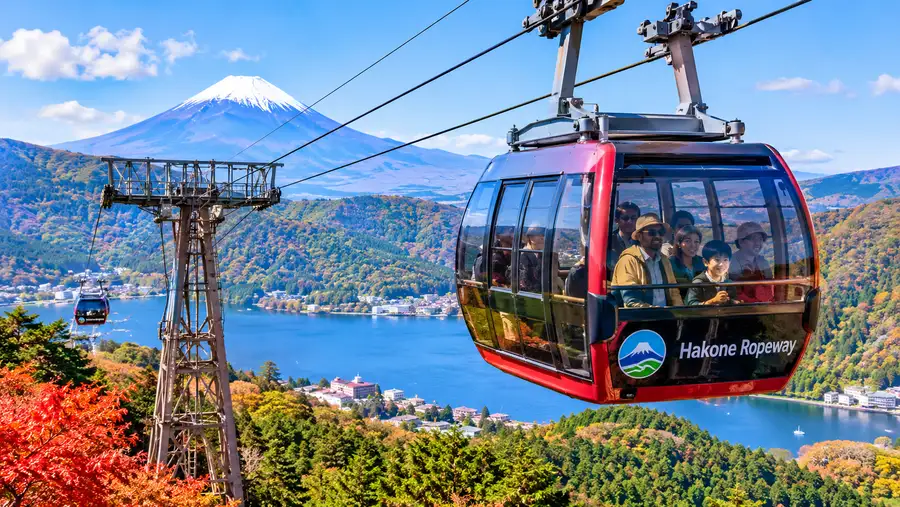
Hakone Komagatake vs. Hakone Ropeway: How They Compare
Travelers constantly confuse these two systems because of their names. The standard Hakone Ropeway connects Sounzan station to Togendai via the sulfuric vents of Owakudani. The Komagatake lift sits on the eastern shore of Lake Ashi and heads up a standalone mountain peak. You cannot ride between them on a cable car; you have to take a bus or a boat to move from one system to the other.
If you have limited time in the region, deciding which one to ride comes down to what you want to see. The standard ropeway delivers raw volcanic geology, black sulfur eggs, and seamless transit connections on the circular sightseeing route. The hakone en ropeway offers quiet alpine air, panoramic coastal views that reach all the way to Sagami Bay, and a visit to a mountaintop Shinto shrine that feels completely detached from modern Japan.
| Feature | Hakone Komagatake Ropeway | Standard Hakone Ropeway |
|---|---|---|
| Base Station | Hakone-en (Lakeshore) | Togendai (Lakeshore) or Sounzan |
| Summit / Midpoint | Mt. Komagatake (1,327m) | Owakudani (1,044m) |
| Cabin Style | Large aerial tram (101 people) | Continuous small gondolas (18 people) |
| Transit Pass Coverage | Separate ticket (Seibu line) | Included in Hakone Free Pass |
| Standard Round-Trip Fare | 1,800 yen | 3,700 yen (full route) |
| Main Highlight | Shrine, Fuji vistas, coastal bays | Volcanic sulfur fumes, black eggs |
| Typical Crowds | Moderate to light on weekdays | Very heavy daily queues |
Cost is another distinct factor. A full round-trip on the Owakudani route is quite expensive if purchased as an individual ticket, as explained in our guide to Hakone Ropeway ticket prices and booking. The hakone komagatake ropeway price is roughly half that amount. If you are visiting Hakone by rental car rather than using the train system, riding the Komagatake lift often makes more practical sense because parking at Hakone-en is large and avoids the severe road bottlenecks around the volcanic valley.
Book your hakone ropeway experience:
What to Expect at the Mount Komagatake Summit
Stepping out of the upper station building hits you with a sharp drop in temperature. Even on a warm July afternoon by the lake, the wind on the plateau bites through thin t-shirts. The landscape up here is almost entirely treeless, carpeted in low brown and green grasses that ripple in the gale.
The main path from the station leads along a paved stone walkway toward Hakone Mototsumiya. This is the original inner shrine of the famous Hakone Shrine located below on the lakeshore. A striking vermilion torii gate stands against the sky with no trees around it to soften the silhouette. Behind the gate sits a small, pale stone shrine hall surrounded by low rope barriers. There are no priests living at this elevation year-round; the building is usually shuttered, opening only for seasonal ceremonies. Standing beside the torii while the fog rolls across the ridge feels profoundly ancient.
Pro tip: Bring a windproof jacket even if the weather at lake level feels warm. The summit ridge acts like a funnel for maritime winds blowing off Suruga Bay, often dropping the windchill by 6 to 8 degrees Celsius within minutes.
Walking the full loop trail across the plateau takes about 25 minutes at a relaxed pace. On a crisp autumn morning, the visual range from the summit is staggering. Looking northwest, Mount Fuji rises behind the crater rim of Mount Ashigara without any intermediate hills blocking the base. Turn to the southeast, and you can see the entire arc of Sagami Bay, the Izu Peninsula stretching into the Pacific, and the high-rise silhouette of Yokohama far on the horizon. If you look west, Suruga Bay glints in the midday sun.
Weather is the gamble. Just like everywhere else in Hakone, clouds can swallow the mountaintop in twenty minutes. You might board the tram in bright sunshine, emerge at the summit in dense white mist, and watch Mount Fuji disappear before you finish walking to the shrine. Checking the live summit webcams before buying your ticket at the base is essential.
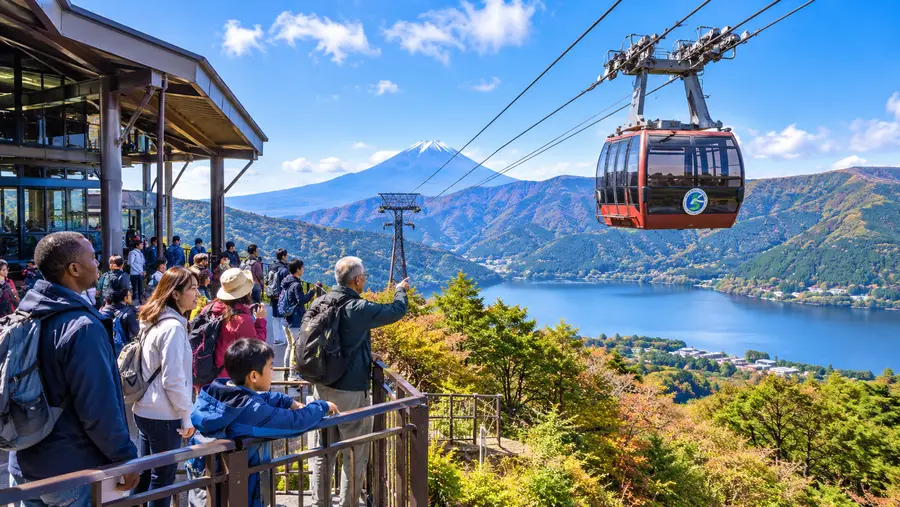
How to Reach Hakone-en and Practical Travel Tips
Getting to the base station requires a bit of forethought because the transit options depend on which bus line you take. The Hakone Tozan buses - the ones covered by the Odakyu Free Pass - do not run directly into the Hakone-en bus terminal. Instead, they drop passengers at Moto-Hakone, leaving you with a 40-minute walk or a short taxi ride.
To reach the ropeway directly without walking, look for the Izu Hakone Bus network. These blue-and-white buses depart from Odawara Station (stop number 5) and Hakone-Yumoto Station, running straight to the Hakone-en parking lot in about 50 minutes. Remember that Izu Hakone buses are run by Seibu, so you will pay standard cash or IC fares for the ride.
Another scenic option is the lake boat. The Ashinoko Sightseeing Cruise (run by the Prince/Seibu Group, recognizable by their clean modern catamarans) docks right at the Hakone-en pier. If you are already at Kojiri or Hakone-sekisho-ato, hopping on the catamaran takes about 15 minutes across the water. Note that the famous pirate ship cruise operated by Hakone Sightseeing Cruise does not stop at Hakone-en; their boats only call at Togendai, Moto-Hakone, and Hakone-machi.
- Check the summit visibility first: Look at the live monitor at the ticket window. If the screen shows pure white fog, save your 1,800 yen for lunch.
- Keep track of the last car: The final ropeway descent leaves the mountain at 4:50 PM. Missing it means a rough, unlit hike down an unpaved mountain trail in the dark.
- Wear sturdy walking shoes: While the central path to the shrine is paved, the scenic loop trail follows loose gravel and volcanic rocks that turn slick after rain.
- Combine with the lakeside aquarium: If you are traveling with young kids, you can purchase a combined ticket at the window covering both the ropeway and the Hakone-en Aquarium for a slight savings.
Frequently Asked Questions about hakone komagatake ropeway
Is the Hakone Komagatake Ropeway included in the Hakone Free Pass?
No, it is not covered. The lift is owned and operated by the Prince Hotel and Seibu Group, while the Hakone Free Pass is an Odakyu Railway product. You can, however, show your Free Pass at the ticket desk to receive a small discount of roughly 10 percent off the standard round-trip fare.
How long should I plan to spend at the summit?
Most travelers spend between 45 and 60 minutes at the top. That allows plenty of time to stroll the scenic loop trail, take photos at the Hakone Mototsumiya shrine, admire the panoramic views toward Mount Fuji and Sagami Bay, and catch the next scheduled cabin back down.
Can you hike up or down instead of riding the ropeway?
There is an established hiking trail running between Hakone-en and the summit of Mount Komagatake. It is steep, rocky, and takes roughly 90 minutes of steady climbing through dense forest before opening onto the grassy ridge. Many hikers buy a one-way ropeway ticket to the top and hike back down to save their knees.
Does the Hakone Komagatake Ropeway operate in bad weather?
Strong winds are the most common reason for operations to pause. Because the large aerial tram relies on long spans of cable, crosswinds exceeding 15 meters per second will shut down the service for safety. Rain does not stop the ropeway, but thick fog will completely eliminate the views from the peak.
Quick Reference
- Adult ticket: 1,800 yen round trip
- Child ticket: 900 yen round trip
- Ride duration: 7 minutes each way
- Frequency: Departs every 20 minutes
- Pass status: Not covered by Hakone Free Pass
Book your hakone ropeway experience:
Is It Worth It?
If your sole goal in Hakone is running the standard Golden Loop as fast as possible, you will probably skip this ride simply because it requires stepping off the main train-and-cable-car conveyor belt. But if you appreciate quiet spaces, wilder mountain topography, and Shinto shrines that feel truly spiritual rather than commercial, heading over to Hakone-en is well worth the extra effort. The panoramic perspective from the ridge gives you an understanding of the region's volcanic geography that you simply cannot get from down by the water. Keep an eye on the morning clouds, pack a decent sweater, and grab a cabin window facing west on the ride up.
Read more about hakone ropeway.