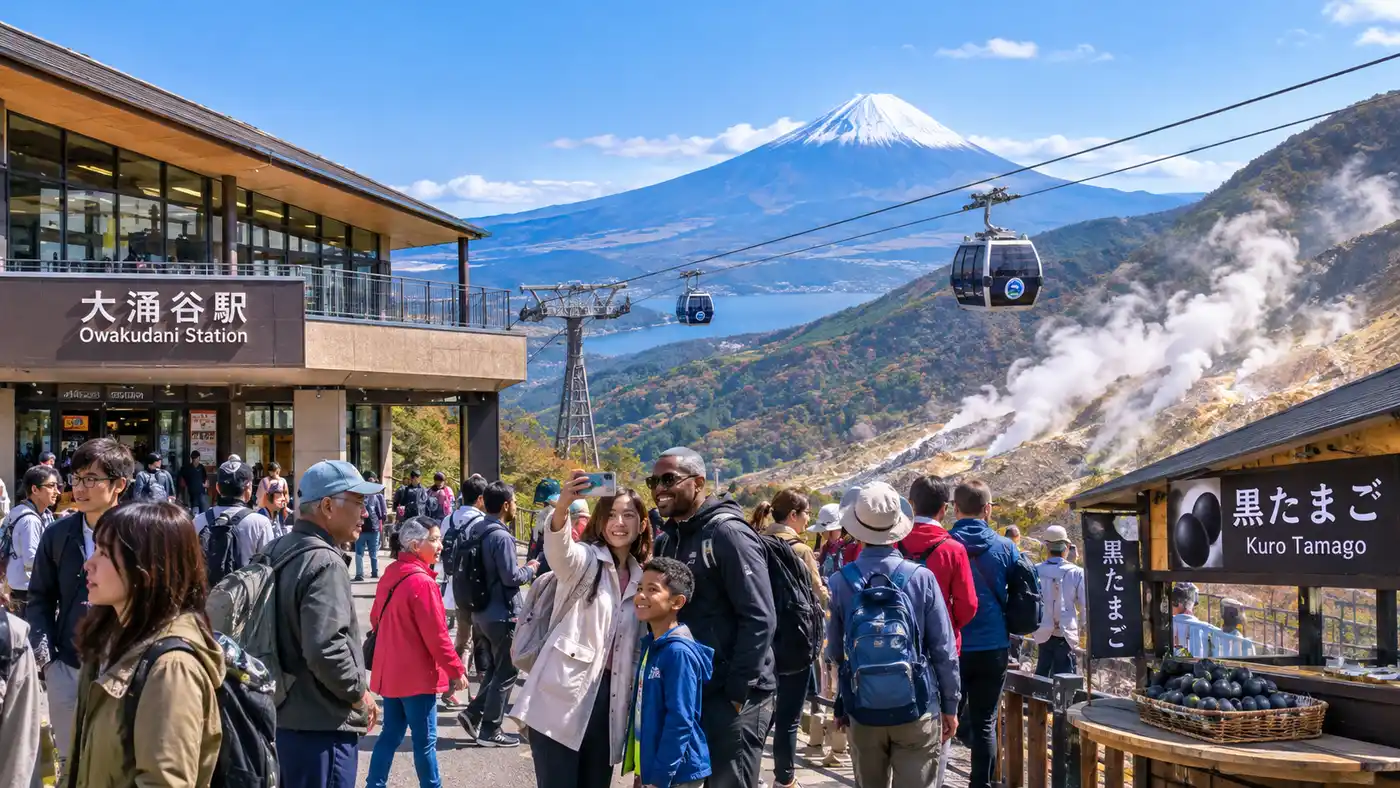
Owakudani Station, Black Eggs and Mt. Fuji Ropeway Views
You smell Owakudani before you see it. The sharp, mineral tang of volcanic gas hits the cabin air vents just as your gondola clears the jagged rim of Mount Kamiyama. Down below, the lush green cedar forests of Kanagawa Prefecture vanish, replaced by barren yellow stone, skeletal timber, and boiling mud pots hissing steam into the cold air. Riding the hakone ropeway owakudani stretch is easily one of the most surreal transit experiences in Japan. It feels less like a cable car commute and more like an emergency airlift over an active geothermal wasteland.
Most travelers board the ropeway with two specific goals in mind: biting into a jet-black hard-boiled egg and catching that postcard-perfect shot of Mount Fuji towering over the crater. Getting both on the same afternoon depends heavily on timing, volcanic gas levels, and shifting mountain winds. Here is what actually happens when you reach the crater floor, how to navigate the station crowds, and where to look if you want the mountain views everyone chases.
Book your hakone ropeway experience:
Riding into the Sulfur Valley: Hakone Ropeway Owakudani Station
Owakudani translates roughly to "Great Boiling Valley." It was carved out about 3,000 years ago when Mount Hakone had its last catastrophic phreatic eruption, leaving behind a scarred basin that still vents hot steam and sulfurous gases. The ropeway glides directly over this abyss. As your cabin hangs from the steel cables 130 meters above the canyon floor, you get a straight down view into industrial piping systems, concrete erosion barriers, and natural steam vents staining the rock face bright sulfur yellow.
At 1,044 meters above sea level, Hakone ropeway Owakudani Station serves as the transit nexus of the entire ridge. Every passenger has to switch cabins here. The ropeway operates as two independent loops, Sounzan to Owakudani on one side and Owakudani to Togendai on the other, so you cannot simply sit back and cruise through. Everyone gets funneled out through the automatic doors into the terminal building, which smells perpetually of sulfur, fried noodles, and steamed eggs.
Note: Volcanic gas concentrations can spike without much warning. If you have asthma, bronchitis, or heart issues, stay inside the enclosed terminal concourse or skip stepping out onto the open-air caldera observation deck entirely.
The station building itself is surprisingly modern. It holds souvenir shops, public restrooms, lockers for heavy daypacks, and an indoor viewing hallway wrapped in floor-to-ceiling glass. If the mountain winds outside are gusting at 40 kilometers per hour, which happens quite often in autumn and spring, that indoor hallway is where you want to be. On clear mornings you can stand by the southern windows and trace the ropeway cables dropping steeply toward Lake Ashi, while northern windows frame Mount Fuji sitting completely unobstructed across the valley.
The Legendary Hakone Ropeway Black Egg (Kuro-tamago)
Nobody visits this ridge without eating a black egg. Known locally as kuro-tamago, these are standard chicken eggs boiled inside the mineral-rich geothermal hot springs scattered across the upper volcanic zone. The water sits at roughly 80 degrees Celsius and carries high concentrations of sulfur and iron. A natural chemical reaction occurs between the iron ions in the spring water and the hydrogen sulfide gas escaping the ground, coating the porous eggshells in a layer of jet-black iron sulfide.
Local folklore claims that eating just one egg adds seven full years to your life, while eating two gets you fourteen. The superstition supposedly stops at three because pushing your luck against the mountain spirits is considered bad form. Do they taste different? Honestly, not really. Once you peel away the brittle black shell, the egg white inside is pristine white, and the yolk tastes like a well-cooked, rich hard-boiled egg with a faintly earthy undertone. Still, sitting on an outdoor stone bench with sulfur steam drifting past your nose while cracking a warm egg is a ritual worth keeping.
Pro tip: Do not burn your fingers trying to peel the eggs immediately after buying the bag. The iron shell holds geothermal heat for a surprisingly long time, so give them three or four minutes to breathe before cracking.
Buying them is straightforward, though you need to know how the vendor operates to avoid confusion at the register:
- Packaging units: Eggs are sold exclusively in paper bags containing 4 or 5 eggs with a small pinch packet of table salt; vendors will not split bags or sell individual eggs.
- Payment methods: Bring cash in small bills or local IC cards like Suica and Pasmo, as card readers occasionally drop connection in high winds.
- Best eating spot: Take your bag up to the outdoor terrace near the giant black egg statue, where you can rest the warm shells on wooden standing tables away from the main door draft.
- Shell disposal: Use the dedicated eggshell recycling bins located beside the souvenir shop exits rather than tossing them into ordinary park trash cans.
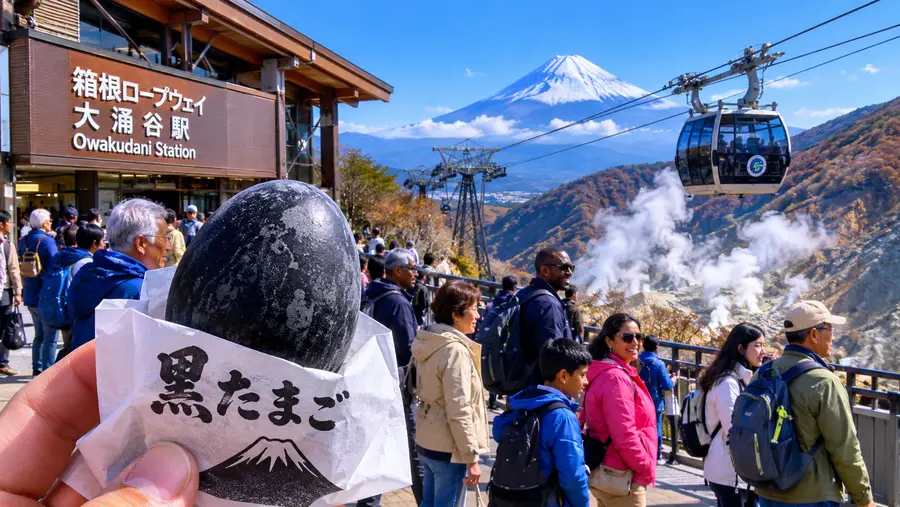
Can You See Mt Fuji from Hakone Ropeway? Best Vantage Points
Can you see Mt Fuji from Hakone ropeway cabins? Yes, but only along specific stretches and only if the weather cooperates. Mount Fuji does not hide behind Owakudani, it sits roughly 25 kilometers northwest of the valley. When the air is crisp, the sight is startlingly huge. The volcano feels close enough to touch, rising above the low hills that ring the Hakone caldera.
The premier Hakone ropeway views happen during the descent between Owakudani and Ubako Station. If you board at Owakudani heading toward Lake Ashi, try your best to stand on the right side of the gondola cabin facing the direction of travel. As the gondola slides smoothly past the first support tower and clears the station ridge, the ground drops away into cedar valleys, and Mount Fuji appears in the window frame. On windless winter days, the snowcap glistens against deep blue sky, creating the classic Hakone ropeway view of Mt Fuji that graces travel posters across Japan.
The segment running from Sounzan up to Owakudani offers a totally different visual experience. You catch brief glimpses of Fuji just before pulling into the crest, but mostly this leg is about raw volcanic power. You see the deep, rust-colored scars of the sulfur quarries, industrial steam pipes snaking through the scree, and yellow plumes venting from cracked earth. It is harsh, stark, and utterly alien compared to the serene lake views waiting on the other side.
Book your hakone ropeway experience:
Comparing Hakone Ropeway Views: Segment by Segment
Each section of the ropeway journey has distinct vantage points, terrain, and weather quirks. Knowing which window to claim before the automatic doors slide shut makes a huge difference in what you actually get to photograph.
| Ropeway Segment | Key Landscape Features | Mt. Fuji Visibility | Best Cabin Position |
|---|---|---|---|
| Sounzan to Owakudani | Deep gorges, industrial sulfur mines, steaming valley floor | Brief glimpse near the mountain crest | Left side facing uphill |
| Owakudani Station | Panoramic caldera basin, smoking vents, active fumaroles | Full view from northern terrace platforms | Station outdoor viewing deck |
| Owakudani to Ubako | Lush mountain slopes, descent into Hakone forest basin | Spectacular, unobstructed views | Right side facing downhill |
| Ubako to Togendai | Dense cedar woods, Lake Ashi shoreline, pirate ship docks | Partial, fades as cabin descends into tree canopy | Front-facing windows |
Keep in mind that high alpine winds affect the ropeway daily. Fog rolls up from Sagami Bay unpredictably, and winter gales can shut down operations within thirty minutes. Before heading up from Gora, check the Hakone Ropeway weather and closure status to make sure the cabins are actively clearing the ridge. If high winds ground the cars, replacement highway buses run between the stations, but those buses travel through inland roads and skip the sweeping crater vistas entirely.
If you are planning your day down to the minute, study the stations and timetable guide so you do not get stranded at Owakudani after the final cabin leaves. Gondolas usually stop boarding around 16:45 in summer and 16:00 during short winter days. Once the ropeway shuts down for the evening, the valley clears out rapidly, leaving only howling wind and steam.
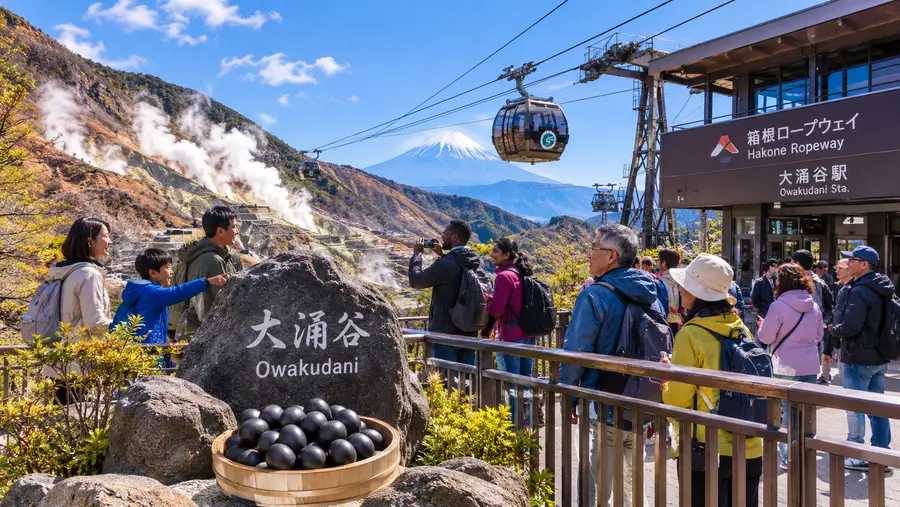
Exploring Around Owakudani: Geo Museum, Trails and Souvenirs
Most day trippers spend roughly 45 to 60 minutes around Owakudani Station before hopping back into a gondola. That gives you plenty of time to eat a black egg, take photos by the volcanic lookout, and wander through the Hakone Geo Museum. The museum costs only 100 yen to enter, and while it is modest, it features excellent interactive seismograph displays and geological cross-sections showing how the magma chambers underneath Hakone interact with groundwater.
Walking trails directly through the steaming fumaroles have a complicated history. Years ago, visitors could wander freely along open stone paths right up to the bubbling egg-boiling pools. Following increased seismic swarms and gas output in 2015, the Ministry of the Environment sealed the upper nature paths. Today, access to the Owakudani Valley Nature Trail requires advance online reservations for guided walking tours, which run four times daily and cost about 1,000 yen. Hikers wear safety helmets and carry portable emergency gas monitors as an instructor leads them past the active vents.
Before boarding the cable car toward the lake, take ten minutes to prepare for the change in altitude and environment:
- Layered clothing: The valley floor sits at high elevation where temperatures typically run 5 to 8 degrees cooler than Tokyo or Odawara, so keep a windbreaker in your bag.
- Hydration: Inhaling airborne sulfur gas dries your throat rapidly; carry a water bottle bought from the station vending machines.
- Eyewear: On breezy afternoons, fine volcanic grit blows across the open platform, making sunglasses practical even on overcast days.
- Souvenir specialty snacks: Pick up a box of sulfur-blackened manju sweet buns or wasabi-infused rice crackers at the Owakudani Kurotama House before the lines swell at midday.
Frequently Asked Questions about hakone ropeway owakudani
Does the Hakone Free Pass cover the ropeway to Owakudani?
Yes, the standard Hakone Free Pass covers unlimited rides on the entire ropeway line between Sounzan and Togendai, including boarding and transferring at Owakudani Station without buying separate tickets.
Why do the eggs turn black at Owakudani?
The eggshells turn black due to a natural chemical reaction. Minerals in the geothermal waters, primarily iron, bond with escaping hydrogen sulfide gas to form an iron sulfide crust on the porous shell during the boiling process.
Can you visit Owakudani if you have respiratory issues?
Visitors with asthma, bronchitis, or heart conditions are advised by local health authorities to avoid spending extended time outdoors around Owakudani. Volcanic sulfur dioxide and hydrogen sulfide gases can trigger severe airway irritation.
What time of day is best to see Mount Fuji from the ropeway?
Early morning offers the clearest views of Mount Fuji, ideally between 9:00 and 10:30. By midday, rising thermal currents from the valleys often generate thick cloud cover that obscures the volcano peak until late afternoon.
Quick Reference
- Station elevation: 1,044 meters
- Black eggs price: 500 yen for 4 or 5 eggs
- Fuji viewing side: Right side of cabin toward Lake Ashi
- Operating hours: Generally 9:00 to 16:45 (shorter in winter)
Book your hakone ropeway experience:
The Bottom Line
A morning spent at Owakudani feels dramatic in a way few other day trips from Tokyo can match. The transition from peaceful forest hillsides to the raw, hissing geology of the sulfur canyon gives you a direct look at the volcanic forces shaping the Japanese archipelago. Grab your paper bag of hot black eggs, secure a window spot on the downhill side of the gondola, and keep your camera ready for the exact moment Mount Fuji steps out from behind the ridge.
Read more about hakone ropeway.